No products in the cart.

A good domain name can make your business easier to remember, easier to trust and easier to find. A poor one can quietly do the opposite.
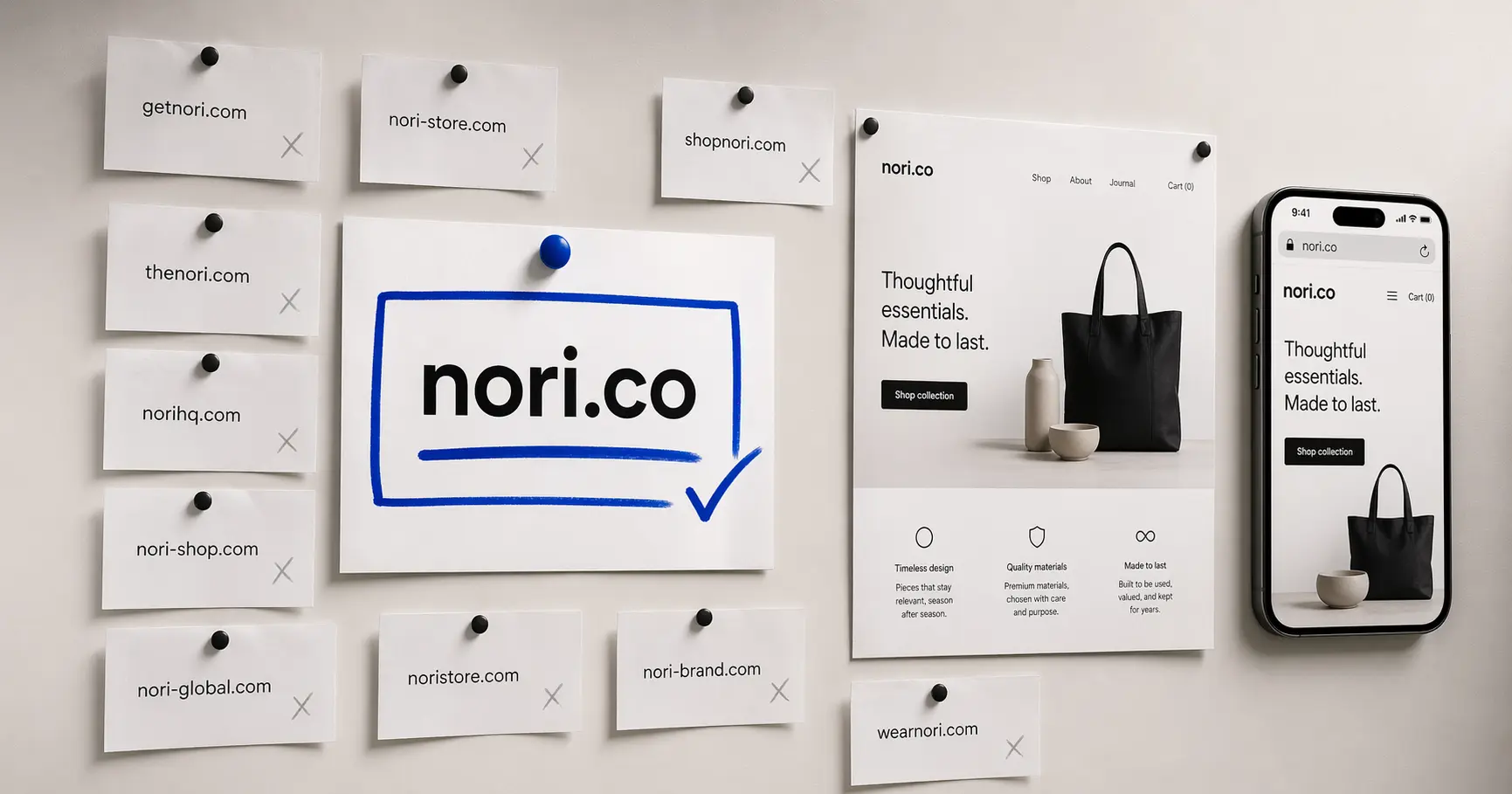
A domain name can feel like a small decision when you are building a website, but it often carries more weight than people expect. It becomes part of your first impression, part of your brand and part of how easily people can remember and find you online.
A strong domain name helps a business feel clearer, sharper and more credible. A weak one can make things feel awkward, forgettable or less professional before someone has even explored the rest of the website. That is why it is worth putting more thought into it than simply registering the first option that happens to be available.
Your domain is the address people type, click, share and remember. It appears in search results, on social profiles, on printed materials and in conversations about your business. If it feels clean and well chosen, it quietly strengthens the way the business is perceived. If it feels messy or confusing, it can weaken that impression just as quietly.
It is not only a technical choice. It is part of presentation, trust and memorability.
In most cases, shorter domain names work better than longer ones. They are easier to type, easier to repeat out loud and easier to remember later. They also reduce the chance of spelling mistakes, which matters more than many people realise.
That does not mean the domain has to be extremely short or clever. It simply means that a clean, direct name is usually more useful than something long and clumsy.
The goal is clarity, not cleverness for its own sake.
A good domain name should be easy to say in conversation and easy to spell after hearing it once. If someone has to ask you how to spell it, whether there is a hyphen in it or whether a number is written as a digit or a word, the name is already creating friction.
Word of mouth still matters. A domain that sounds natural when spoken tends to work much better than one that constantly needs explanation.
Hyphens and numbers often make a domain harder to communicate and less polished to look at. They can also create uncertainty when the name is shared verbally. In most cases, if a cleaner version without them is possible, that is usually the stronger choice.
There may be exceptions, but as a general rule, simpler domains tend to feel more professional and more trustworthy.
A domain should suit the business now, but ideally it should still make sense as the business grows. If the name is too narrow or tied too tightly to one small service, it may become limiting later. That can create problems if the business expands or shifts direction.
It is often smarter to choose something with enough flexibility to grow with you rather than something that only fits one phase of the business.
The right extension depends on who you want to reach and how you want the business to be perceived. For many UK-based businesses, a .co.uk or .uk can make perfect sense. A .com may feel broader or more international. What matters most is that the extension feels relevant and trustworthy for the kind of business you are running.
The extension should support the identity rather than feel random or disconnected from it.
The domain name should feel connected to the business name, the tone of the brand and the way you want the business to be seen. If the domain feels awkward while the branding feels polished, the mismatch can weaken the overall impression.
A good domain should feel like a natural extension of the brand rather than something separate or improvised.
It is easy to get frustrated when the first few choices are unavailable, but availability alone should not decide the whole direction. A weak domain chosen just because it was free can become something you regret later. It is usually worth stepping back, rethinking the naming and exploring better alternatives rather than forcing a poor fit.
The aim is not just to find any available domain. It is to find one that is available and genuinely works.
Some businesses try to make a domain sound overly clever or highly original, but in practice that can sometimes make it less effective. A memorable domain is usually one that feels clear, natural and easy to retain after a quick glance. If people have to decode it, the value drops.
A stronger approach is usually to focus on names that feel simple, clean and easy to associate with the business. Memorability often comes from clarity rather than complexity.
A good domain name supports trust, recognition and long-term presentation. It helps people find you more easily and remember you more confidently. It may seem like one small technical detail, but it becomes part of how the business is experienced every time someone sees it.
That is why it is worth treating the choice seriously. A better domain name can quietly strengthen the whole online presence around it.

 By Papagaio
Feb 12, 2025
 By Papagaio
Jun 13, 2026
 By Papagaio
Dec 12, 2023
 By Papagaio
Jan 14, 2026
 By Papagaio
May 18, 2023