No products in the cart.

A simple website is enough for some businesses, but there comes a point when growth, processes and customer needs demand something more flexible and more functional.
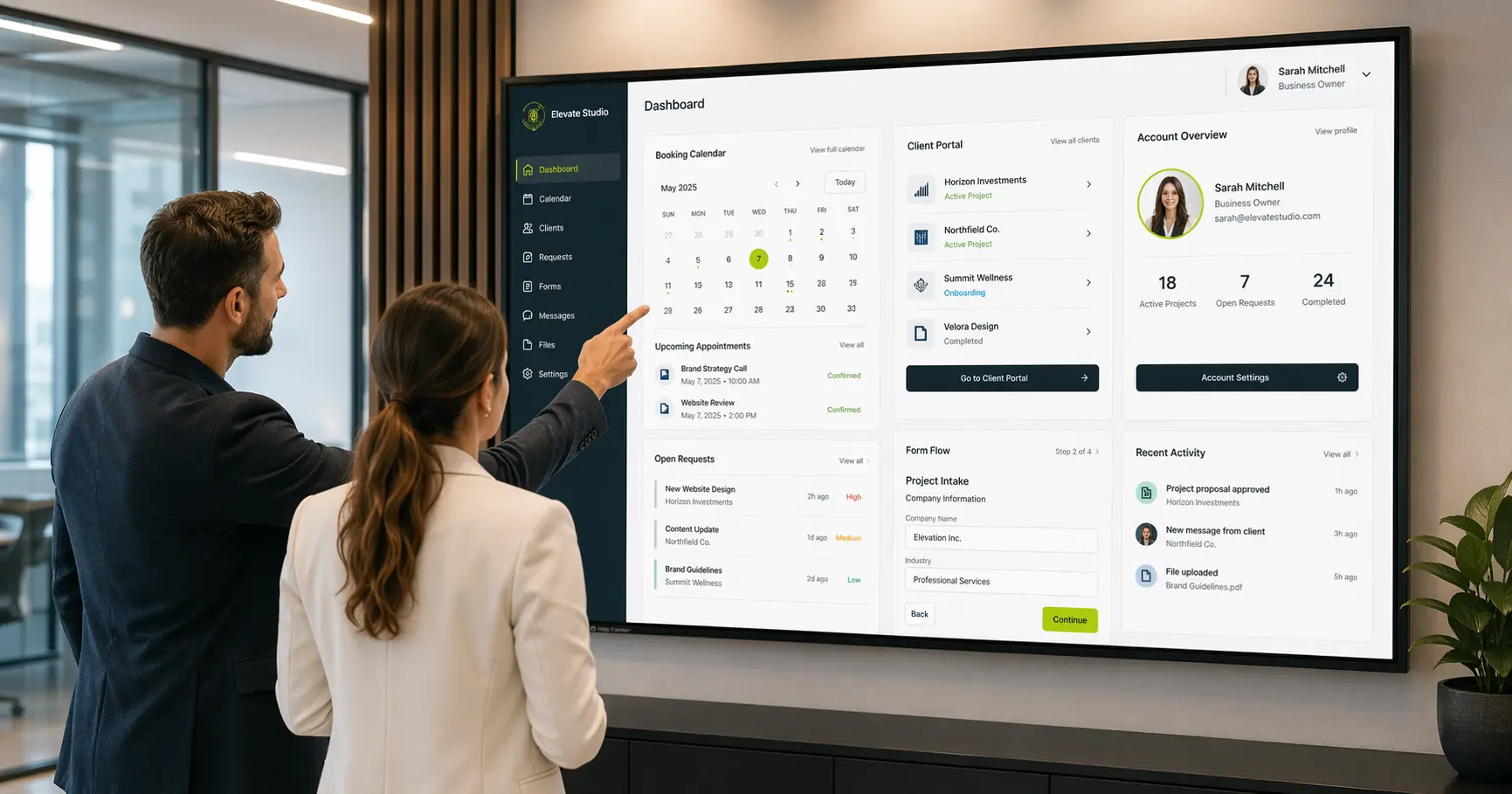
A basic website can be exactly the right starting point for many businesses. If all you need is a professional online presence, some clear service pages and a way for people to get in touch, a simpler setup often makes perfect sense.
The problem comes when the business grows but the website stays stuck in the same shape it started with. At that point, the site may still look fine on the surface, but it stops supporting the way the business actually works. That is usually the point where something more than a basic website starts to make sense.
The jump does not always mean building a huge complicated system. It simply means recognising when the business now needs more functionality, more flexibility or more efficiency than a simple brochure-style site can realistically provide.
A basic website is usually one that presents information clearly but does not do much beyond that. It might include a homepage, service pages, an about page, a contact form and maybe a blog or gallery. For many businesses, that is enough at the beginning.
The website acts mainly as a digital storefront. It tells people who you are, what you do and how to contact you. That can be a very effective foundation when the business does not yet need anything more advanced.
There is nothing wrong with that model when it suits the business properly.
Businesses rarely wake up one morning and suddenly decide they need a more advanced website for no reason. Usually, the shift starts with pressure. The current site begins to feel limiting. Tasks become repetitive. Customers need more from it. Internal processes become more manual than they should be.
At that point, the website stops being just a presentation tool and starts becoming part of how the business actually operates.
If your website now needs to handle more than just information, you may be moving beyond the “basic website” stage. That could mean booking systems, customer logins, tailored forms, account areas, advanced filtering, user dashboards, member-only content or more structured interactions between the visitor and the business.
Once those needs appear, trying to force everything into a very basic setup often leads to awkward workarounds rather than a strong long-term solution.
There are usually a few clear indicators that the current setup is no longer enough.
When several of these start happening at once, the basic site may be doing less for the business than it should.
One of the biggest reasons businesses move beyond a simple website is efficiency. If the same information has to be copied manually, appointments need to be handled by email, files are passed back and forth awkwardly, or customer updates are all managed by hand, the website is not helping as much as it could.
Custom functionality can reduce that friction. It can make the site part of the workflow instead of just being where people first land before everything happens manually elsewhere.
Sometimes it is not only the business that changes. Customers change as well. They become more used to smoother online systems, easier booking experiences, account access, clearer tracking and faster interaction. If the website feels too static or too limited, it can start to feel behind what users expect.
That does not mean every business needs a custom platform. It simply means there are times when a more capable digital setup creates a better customer experience as well as a better internal one.
A lot of people hear “more than a basic website” and immediately imagine an overbuilt, expensive system full of features they do not need. That is not the goal. The goal is not complexity for its own sake. The goal is building the right level of functionality for the real needs of the business.
Sometimes that means a booking flow. Sometimes it means a customer portal. Sometimes it means forms that lead users through the right steps. Sometimes it means linking the website to the way the business already works behind the scenes.
A brochure website mainly presents information. A more advanced website or web app starts to perform tasks. It helps users do something, track something, access something or manage something. That difference matters because it changes the role the website plays inside the business.
Once a website starts becoming operational rather than purely informational, it usually needs more careful planning, clearer structure and more tailored development. That is where the jump from a simple website to something more capable tends to happen.
Another important point is that moving beyond a basic website does not have to happen in one massive leap. In many cases, the smarter route is to build in stages. Start with the most useful functionality first, then expand as the business grows and the need becomes clearer.
That approach often gives businesses more flexibility and avoids the problem of investing in features that are not actually needed yet.
A simple website is not a weakness when it fits the business. But when the business needs more interaction, more automation, more flexibility or more support from its digital setup, staying simple for too long can start to hold things back.
That is usually the moment to stop asking whether the website looks acceptable and start asking whether it is actually doing enough. When the answer becomes no, that is when something more than a basic website starts to make real sense.

 By Papagaio
Feb 12, 2025
 By Papagaio
Jun 13, 2026
 By Papagaio
Dec 12, 2023
 By Papagaio
Jan 14, 2026
 By Papagaio
May 18, 2023